The first time I saw somebody freeze throughout an emergency, it was not due to the fact that they did not care. It was due to the fact that they had never in fact practiced what to do with their own hands. They had actually enjoyed a few videos, read a brochure at the workplace, and presumed that would certainly suffice. When a colleague collapsed in the lunchroom, those voids were shateringly obvious.
That experience has formed just how I design and supply fast first aid and CPR training. Yes, you can find out life‑saving skills at document rate. The real inquiry is exactly how to do it without cutting the wrong corners.
Express first aid and CPR courses exist for a factor. Workplaces need fast certification to meet conformity due dates. Parents and carers handle family schedules. Wellness and community employees should restore their first aid certificate regularly while still covering shifts. Rate is not the opponent, yet it needs to be taken care of with care.
This overview goes through what you can reasonably anticipate from a fast first aid course, just how express CPR training functions, where these formats radiate, and when slower, deeper first aid training is still the far better option.
What "express" truly indicates in first aid and CPR training
Different providers utilize different labels: fast first aid course, express first aid course, quick refresher, condensed, mixed, and more. Underneath the advertising, there are only a few main variables that figure out how "express" a course is.
The one-on-one classroom element is the most visible item. A traditional first aid and CPR course, aimed at beginners, commonly competes a complete day, sometimes 6 to 8 hours. An express first aid course may press the in‑person sector to 3 or 4 hours, while a pure fast CPR course can be as short as 90 mins if significant pre‑learning is done online.
The shipment mode is the second bar. Several service providers now provide mixed first aid and CPR training classes: you complete concept modules online, at your very own pace, after that attend a much shorter useful session for analysis and hands‑on practice. If the provider has actually done the instructional layout well, you end up with comparable knowing results in much less class time.
The 3rd component is prior experience. A fast CPR refresher course for somebody that performs CPR training regularly on the job can be much shorter than a first aid and CPR course for someone that has never ever touched a manikin. Excellent trainers will certainly ask about your background and suggest proper layouts as opposed to compeling everyone into the very same express box.
When you see expressions like express first aid training or fast first aid course near me, look past the label and ask two simple inquiries: the number of overall learning hours are involved, and how much of that time is practical ability technique, not just reviewing slides.
What you can genuinely discover in a fast first aid course
Speed functions as long as the course is truthful about its extent. A well made fast first aid course can teach you just how to respond with confidence to the most typical life‑threatening situations, supplied you come prepared and engage fully.
In my experience, a 3 to 4 hour express first aid course that consists of CPR can normally cover:
Basic emergency activity plans. This includes how to come close to a scene safely, just how to call for assistance, and just how to make use of an organized assessment like DRSABCD or something comparable. The aim is to quit people rushing in thoughtlessly or shedding valuable minutes in confusion.
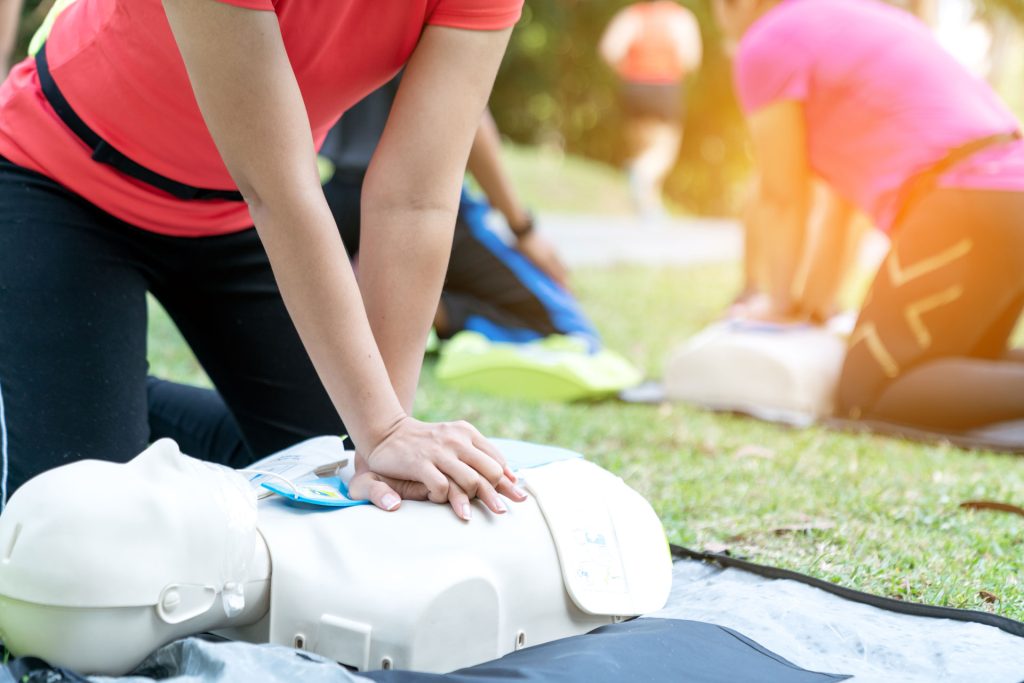
High top quality CPR training. Even in fast cpr courses, the mass of time have to go into compressions and rescue breaths on manikins, instructing right deepness, price, and recoil. If an express cpr course invests even more time on slides than on your method, it is not giving you what you need.
Use of an AED. Modern automated outside defibrillators are developed for lay responders, yet people still hesitate to utilize them. Short, duplicated exercise with a training AED, consisting of transforming it on, applying pads, and adhering to prompts, makes a genuine difference.
Choking management. This is just one of the most typical emergency situations throughout any age groups. A fast first aid course should cover back impacts and upper body drives (and abdominal thrusts where suitable), with technique on adult and youngster manikins or training torsos.
Control of extreme bleeding. You ought to entrust a clear psychological image of how to use direct stress, improvise plasters, and use elevation efficiently. Advanced topics like commercial tourniquets could be consisted of, but in very short courses they are in some cases only introduced at a fundamental level.
Allergic responses and anaphylaxis. Especially essential if you ever before look after kids. Express childcare first aid training definitely should include identifying extreme allergic reactions and exercise with trainer adrenaline auto‑injectors.
Anything yet core set is a reward in a fast first aid course. Topics like burns, fractures, head injuries, diabetes, asthma, and seizures might be consisted of at an overview degree, but there will not be time for deep instance conversation. A good trainer will be truthful regarding that and factor you to longer first aid courses if you work in higher‑risk settings.
The danger comes when a fast first aid training provider markets their course as covering every feasible scenario in 2 hours. If the list of topics looks endless, yet the course is half a day or much less, you can securely think the protection of each subject is surface area level at best.
Where express first aid and CPR courses absolutely shine
Used attentively, express first aid and CPR courses are not a compromise. For the ideal student in the best context, they are specifically what you need.
Busy professionals requiring compliance. Several markets call for an existing first aid certificate or CPR certificate as a problem of employment. Health workers, instructors, special needs support staff, lifeguards, and protection personnel are common examples. For seasoned team who have actually finished several full courses formerly, an express cpr course or fast first aid refresher that targets adjustments in standards and refreshes muscle memory is ideal.
Parents, carers, and volunteers. Moms and dads of infants and toddlers, sports trainers, school volunteers, and foster carers commonly seek a first aid and cpr course for comfort instead of for a work required. They may not have entire days cost-free. A half‑day express childcare first aid course can concentrate tightly on choking, infant and kid CPR, anaphylaxis, febrile seizures, and head knocks, leaving out low‑probability industrial scenarios.
Low threat offices. In workplaces, stores, and comparable low‑hazard environments, the primary risks are clinical emergencies, standard injury, and unexpected cardiac arrest. A fast first aid course integrated with express cpr training normally meets governing needs and offers assigned initial aiders the skills they are likely to need most.

Frequent refresher courses. Skills like CPR fade faster than individuals anticipate. Research suggests that by 3 to 6 months after training, many individuals's method has drifted. Short, focused fast cpr correspondence course provided several times a year do more for real‑world efficiency than a long course every three years.
Distance and accessibility. In regional areas, people in some cases take a trip hours to participate in a full day course. For them, a combined express first aid course, where concept is completed online and the in‑person part is compressed, can decrease traveling costs and time away from job or family.
The essential string running through these examples is that express first aid training works best when it builds on some prior direct exposure to first aid, or when the danger account is fairly straightforward.

Where rate is not your friend
There are scenarios where I actively discourage people from picking fast first aid or fast cpr courses, also when they request them.
High threat environments. Building and construction, mining, hefty production, remote area work, and some exterior experience roles expose employees to intricate injury and postponed rescue response. In those settings, a comprehensive first aid and cpr course, and even advanced FAP first aid or remote location training, is not optional. Cutting back in person hours in such situations is a false economy.
First time learners with anxiousness. Some people arrive at training currently anxious regarding blood, medical subjects, or executing under pressure. Stuffing whatever into a brief express first aid course provides little time to ask concerns, process information, and develop confidence. A slower pace commonly produces much better long‑term retention for them.
Teams that hardly ever see clinical occurrences. If your work environment has had almost no exposure to emergencies in years, your initial aiders will certainly have couple of real‑world anchors for the web content. You require more scenarios, more discussion, even more repetition, not less.
Places with restricted emergency situation reaction. On remote ranches, islands, or during first aid diploma training classes release to catastrophe zones, first aiders are not just connecting a couple of minutes until paramedics get here. They might need to manage a casualty for hours. Fast first aid training that concentrates just on the very first 10 minutes will not prepare them adequately.
In all these contexts, rate must never ever be the primary marketing point. Look instead for deepness, scenario variety, and prolonged useful time.
Choosing an express first aid course that is fast yet solid
When you type "fast first aid course near me" into an internet search engine, you will certainly get a mix of superb companies and ones that just chase quantity. The advertising copy seldom informs the entire tale. A brief list assists divide the two.
Here are practical things to seek when selecting an express first aid course or express cpr training:
- Accreditation and conformity: Check that the organisation is acknowledged by the appropriate nationwide or regional regulator, and that the first aid certificate you receive is valid for work environment needs in your area. Total knowing time, not just course time: A 2 hour classroom session with 4 hours of required pre‑study can be much better than a rushed 3 hour session with no prep work. Carriers should be transparent regarding both. Trainer experience: Ask specifically that educates the first aid and cpr courses. Trainers with frontline scientific or emergency situation feedback backgrounds normally bring richer scenarios and more useful nuance. Practice proportions: In a great express cpr course, everyone should have sufficient time on a manikin, not simply "a fast go". Huge classes with limited equipment are a red flag. Assessment criteria: Be careful of any kind of first aid training where "every person passes no matter what". Skilled evaluation suggests you may have to duplicate an ability up until you get it right, which is a favorable sign.
A reputable service provider will gladly address these questions without defensiveness. If you obtain obscure actions, or if everything is framed around "in and out in under an hour", look elsewhere.
Express child care first aid: what should never be skipped
Childcare settings work on limited ratios and tight routines. Centre directors are usually under pressure to obtain whole groups through express childcare first aid courses prior to license revivals or audits. It is alluring to look for the fastest course on offer.
As someone who has trained lots of child care instructors, I think about numerous content locations non‑negotiable, no matter how "express" the course declares to be.
Infant and child CPR. Adult CPR is inadequate. Personnel has to exercise compressions and breaths on baby and kid manikins, with modification on hand positioning and depth. Express childcare first aid training that does not provide separate method on tiny manikins is incomplete.
Choking in infants and youngsters. Choking occasions in childcare are mercifully unusual, however they are among one of the most confronting emergencies. Team need duplicated method on choking strategies and circumstance discussion concentrated on nourishments, playthings, and exterior play.
Anaphylaxis and bronchial asthma. Child care services commonly care for multiple youngsters with serious allergies and chronic bronchial asthma. An express child care first aid course should offer useful training with mock EpiPens or similar tools, spacer tools, and clear acceleration protocols.
Head injuries and drops. Falls from playground devices or cots, and collisions between children, are everyday truths. Staff should recognize warnings for trauma and when to call emergency services or inform parents.
Legal and documentation duties. While not purely a "first aid ability", understanding occurrence coverage, medicine administration protocols, and care strategies becomes part of risk-free technique in childcare.
A well created express childcare first aid course prioritises these subjects and trims lower‑relevance web content to ensure that the time instructors spend in training really improves child safety.
Fast CPR courses and refresher courses: the unique case
CPR is the component of first aid training probably to directly determine survival. When a person's heart has actually quit, excellent compressions performed promptly can double or triple the chance of survival compared to no CPR. This is why numerous offices schedule different, extra frequent CPR training alongside wider first aid courses.
A fast cpr course, on its own, can be extremely effective if it focuses on:
Correct method. Chest compressions require to be executed at the appropriate deepness and price. In a focused express cpr course, you need to obtain real‑time responses from the instructor and, preferably, responses gadgets in the manikins that reveal if you are within the target range.
Minimising doubt. Even people who recognize CPR theoretically commonly delay in the very first important seconds. Exercising fast evaluation and starting compressions without overthinking is crucial. Short, duplicated situations can accomplish this in a fast format.
AED familiarity. Due to the fact that AEDs differ a little in between brand names, the even more versions you see in training, the less most likely you are to fumble with a genuine tool. Bring pictures or information of AEDs in your real office preferably, so the fitness instructor can approximate them.
Team roles. In work environments where several qualified staff are present, an express cpr course can rapidly pierce duty changing, interaction, and reducing disruptions throughout compressions.
Fast cpr correspondence course work particularly well when set up at regular periods, such as every 6 or one year, instead of leaving every little thing to a complete recertification cycle after 2 or 3 years.
Making fast first aid training stick
The greatest criticism of fast first aid training is that individuals neglect what they discovered virtually as soon as they leave the space. The rate is high, the material dense, and if you do not reinforce it, memory decomposes predictably.
You can balance out that risk with a couple of purposeful habits:
- Prepare prior to you arrive: Total any type of pre‑course analysis or e‑learning appropriately instead of skimming. Watching a couple of high‑quality CPR and first aid video clips aids prime your brain for the hands‑on practice. Ask for added repeatings: During functional segments, if you really feel uncertain, ask the fitness instructor to view you again. A great instructor will happily spend an additional minute correcting your technique. Debrief with coworkers: If your group goes to the exact same express first aid course, take 10 minutes after that to discuss major takeaways and exactly how you would use them in your details workplace. Use aesthetic triggers: Blog post simple first aid action strategies and CPR flowcharts near first aid sets and AEDs. Seeing them continuously rejuvenates your memory without added effort. Schedule micro‑refreshers: Establish a reminder every few months to see a short CPR video or emotionally rehearse what you would certainly do if someone collapsed right in front of you at that moment.
These strategies cost very little time, yet they transform a one‑off fast first aid course into a much more constant learning process.
Online, blended, and face to face: how to combine them at speed
Modern first aid and cpr training classes significantly blend online and in‑person components. For express courses, that mix has a straight impact on exactly how reliable the training feels.
Purely on-line first aid courses are occasionally marketed as fast certification alternatives. For concept, they can be useful: you learn about signs and symptoms, lawful factors to consider, and standard concepts through text and video. Nevertheless, you can not earn a credible work environment first aid certificate on concept alone. Any kind of trusted structure needs sensible assessment of CPR and crucial first aid skills.
Blended express first aid courses, where you handle concept online and go to a short, intensive abilities session, strike a great balance. You come to the classroom knowledgeable about the concepts and terms, which allows the fitness instructor to spend a lot of the restricted time dealing with, training, and screening. This model works especially well for fast cpr courses.
Fully face to face express first aid training can still work if class sizes are managed firmly and the trainer is experienced at pacing. In those sessions, concept needs to be incredibly concentrated. It is far better to discover a few skills deeply than thrill with a thick workbook.
When evaluating alternatives, do not concentrate only on what feels most convenient. Ask on your own truthfully exactly how you find out best. If you understand you deal with self‑directed online research, you could benefit from a slightly longer face to face format rather than a heavily pressed blended one.
When to prolong past "express" and develop greater capability
Fast first aid and express cpr courses satisfy the needs of many workplaces and people. Still, certain roles ask for more specialized or sophisticated first aid training.
If you supervise big public celebrations, operate in remote tourism, lead outside education programs, or coordinate emergency response in your organisation, take into consideration layering extra training in addition to your express first aid course. That might include sophisticated resuscitation, oxygen therapy, remote or wild first aid, or scenario‑based simulations tailored to your field.
For some professionals, such as paramedics, firemans, and particular safety duties, fundamental first aid is just the access factor. They require extensive, multi‑day programs that establish decision‑making under pressure and complex person treatment skills. In first aid Morphett Vale that globe, "express" is not the goal.
Understanding where you remain on that spectrum aids you select wisely. Not every person needs a sophisticated multi‑day program, equally as not every person is well served by a two hour express cpr course.
Final thoughts: speed with responsibility
Speed in first aid and CPR training is both a true blessing and a lure. The true blessing is apparent: more individuals can access first aid training, even more work environments can remain compliant, and extra parents and carers can obtain at the very least fundamental abilities within busy lives. Express first aid courses, fast cpr training, and mixed formats make that possible.
The temptation is to treat a first aid certificate as a box to tick at the most affordable time expense, instead of as an indication that you are genuinely all set to act when someone's life hangs in the equilibrium. That attitude is where shortcuts end up being dangerous.
If you pick an express first aid course or fast cpr correspondence course, method it deliberately. Select a strong carrier, prepare in advance, engage totally throughout practice, and revitalize your skills more often than the bare minimum. Use express childcare first aid training to raise the security of youngsters in your care, not just to satisfy an auditor. Motivate your colleagues to do the same.
Real emergency situations are never arranged. When they show up, you will not care whether your course was three hours or 8. You will care whether your hands know what to do. Express training can get you there, as long as speed offers ability, not the other method around.